

Blog Post
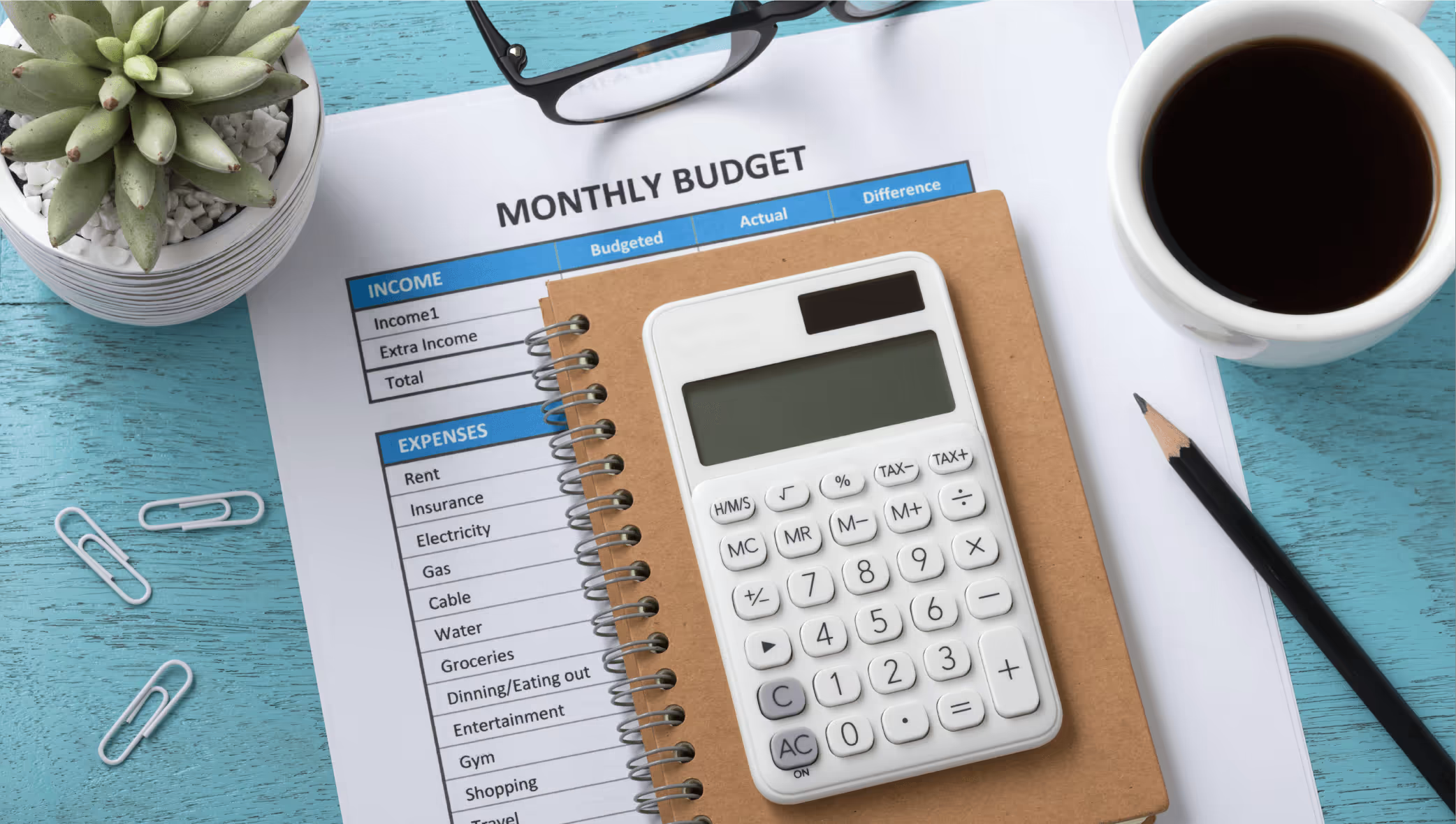
Whether you dream of a quiet life in the countryside, an adventure in a bustling city, or a place to raise your family in the suburbs, buying a new home is a significant investment that requires smart financial planning. If you’re looking to pay off debts, plan for home improvements, or save for a down payment on a home purchase, there are loose ends that need to be tied up before you can become a homeowner, and the only way to meet these goals is by creating an adequate budget.
Determining a budget that best suits your needs and objectives isn’t always so straightforward, but keeping the following information in mind can help you form a financial plan of action that can lead you to your future home.
A household budget is more than just a list of facts and figures; it’s a lifestyle. By partaking in this lifestyle, you’re choosing to put long-term goals like becoming a homeowner, providing for your family, and enjoying your retirement, before more fleeting sources of happiness.
Establishing a budget helps you become more conscious of your financial decisions and how they will impact you in the future. Additionally, it teaches you to ask yourself questions like, "Can I afford this?" "Do I really need this?" "Will this still make me happy a year from now?" before making purchases.
On top of preparing you for the fulfillment of homeownership, following a budget helps keep you out of debt, provides a safety net in case of emergencies, and enables you to feel more in control of your life.
Setting up a budget can be a tedious task, and the process may vary from one household to the next. But, regardless of your financial situation, using the following steps as a framework will help set you on the right path to finding the ideal budget that meets your needs:
1) List your expenses.
Compile your bank statements for the past few months and look at how much money you typically spend. Some expenses, like rent or insurance payments, will be the same from one month to the next, but others will vary from month to month. A few expenses, like holiday gifts or car repairs, are things you don't consistently spend money on, so there's no need to subtract those from your bank account every month.
After examining your previous expenses, you should have a good idea of the average amount of money you spend in a month. Write this number down.
2) List your earnings.
Next, write down how much you earn in a month. Be sure to use the actual amount listed on your paycheck after taxes and other expenses like health insurance and retirement funds are taken out, not the net income listed in your job description.
3) Compare the numbers.
Subtract the number in Step 1 from the number in Step 2. Of course, you want the resulting number to be positive, but simply floating above zero isn't enough to buy a home. You'll need plenty of extra money to afford a down payment, let alone any unexpected expenses that may arise.
4) Examine your spending habits and set goals accordingly.
You will likely notice as you look at your spending history that many of the things you have bought were not worth the money you spent on them in the long run. So make a mental note—or even better, a written reminder—to avoid wasting money on similar expenses in the future and lower your cost of living.
Of course, it's also possible that even after subtracting frivolous expenses, you still won't have a lot of money left at the end of the month. In this case, you will need to make significant lifestyle changes like finding a new job or relocating to a cheaper apartment before you are ready to buy a home. After making these changes, start the budgeting process again from Step 1 and reexamine whether you are financially prepared for homeownership.
5) Download a budgeting app.
Now that you have the information you need down on paper, it’s time to store it electronically to ensure that it’s easily accessible and doesn’t get lost.
Many free apps enable you to organize your budget from your phone or tablet, but how do you know which one to choose? We recommend using one of the following three apps, which allow you to track your spending, sort it into various categories, and offer additional features that help you get your finances on track.
1) Mint
Mint makes budgeting easy by notifying you whenever you have exceeded your budget in any given category and advises you on ways to save in the future. It also reminds you when you have bill payments due and provides a free credit monitoring service.
2) PocketGuard
PocketGuard allows you to personalize your budgeting experience by setting your custom spending categories and adding hashtags to your expenses for easier sorting. You can even export your transaction data to change the numbers around and play “what if” with your spending.
3) Goodbudget
Goodbudget is unique in that it allows users to connect to accounts from multiple devices, meaning you can share an account with your partner, roommates, or family members. This eliminates miscommunications about how household members spend their money and makes it easier for all parties involved to work together towards a common goal.
Once you’ve established a positive financial routine through proper budgeting, you’ll soon be on a path that leads not only to homeownership, but to a future where you have the freedom to pursue even bigger and better goals.
If you’re ready to start planning a new life in a home of your own, Gaylord-Hansen can help you prepare for everything from budgeting to house hunting with our 90-Day Game Plan to Homeownership.
Customers who have worked with us in the past have had great success in closing on their dream homes:
“Outstanding customer service and loan programs. The entire team provided us with detailed support from pre-approval to closing. Great use [of] technology, including dashboards and video updates. Highly recommend Gaylord-Hansen for any mortgage needs!” —Ryan H.
“The Gaylord Hansen team did an incredible job making us feel safe in our home buying process. They kept us updated along the way and their response times was unbelievable. They have our business for life.” —Jeanne L.
“The team has been very professional and helpful throughout the process. I received a personalized experience and financial coaching. This made a big difference as this is my first mortgage and I had numerous financial questions. In addition, the team replied to my messages and addressed all my concerns in a timely manner. Based on my experience, I recommend the Gaylord-Hansen Mortgage Team to anyone who plans to buy a house, especially if this is your first house.” —Andrew G.
To get started on your path to homeownership, download the 90-Day Game Plan to Homeownership today!
Mint is a trademark of Intuit, Inc.; PocketGuard is a trademark of PocketGuard, Inc.; Goodbudget is a trademark of Dayspring Technologies, Inc. CrossCountry Mortgage, its subsidiaries, and affiliates have not been authorized, sponsored, or otherwise approved by Intuit, Inc., PocketGuard, Inc., or Dayspring Technologies, Inc.
Results not guaranteed. CrossCountry Mortgage, LLC does not provide legal, investment, accounting, or tax advice. Please consult a licensed attorney, financial planner, CPA, or tax professional on these ‘tips’ and any information or opinions contained herein.
Compensation was not paid in exchange for these testimonials.
The information contained is the viewpoint of the presenter(s). Individuals should consult their own financial representative.
CrossCountry Mortgage, LLC is not a credit repair company or credit repair organization. CrossCountry Mortgage does not guarantee improvement of your credit worthiness, credit standing, or credit capacity. Any actions you take regarding your personal finances are done at your discretion. CrossCountry Mortgage does not guarantee that you will become eligible for a loan. This is not a commitment to lend or extend credit.
.png)
.png)


